
Warehouse Management System LTWMS
Warehouse management and transport coordination for heavy industry
The LogoTek warehouse management system LTWMS supports material management across multiple industries, with a particular focus on heavy industry and metals. Operators can access information about material movements, storage-yard occupancy and crane operating status. Work orders for cranes and other transport equipment are generated from production-planning data, and statistical information about the current yard status is available. A crane-tracking system for transport monitoring or a complete automation system can be integrated into the WMS. In that case, the storage-yard model is updated using process data received from the cranes. Storage locations are selected according to configurable optimization rules and restrictions.
Key features of LTWMS
- Warehouse management for different industries (metals, paper and container yards) and materials (coils, slabs, billets, blooms, wires, plates and containers)
- Modular client/server architecture with an Oracle or Microsoft SQL Server database
- 3D and 2D visualization of warehouse areas
- Transport management for cranes, trucks, wagons, transfer cars, pallets and other equipment
- Configurable yard layout
- Multilingual operation
- Role-based user management with an LDAP interface
- Integrated functions for fully automatic crane systems, including routing and operation zones
- Configurable storage rules and restrictions
- Customized reports with an integrated report generator
- Clients for PCs, vehicles, cranes and mobile devices
- Interfaces to Level 1, Level 2 and Level 3 systems
- Integrated monitoring functions with SNMP and a PRTG interface
- High-availability options with hot and cold standby
- Turnkey supply including hardware, software and engineering
- Material movements and yard status in one system
- Configurable rules for selecting yard locations
- Work orders based on production-planning data
- Optional crane tracking for transport monitoring
- System monitoring and status information
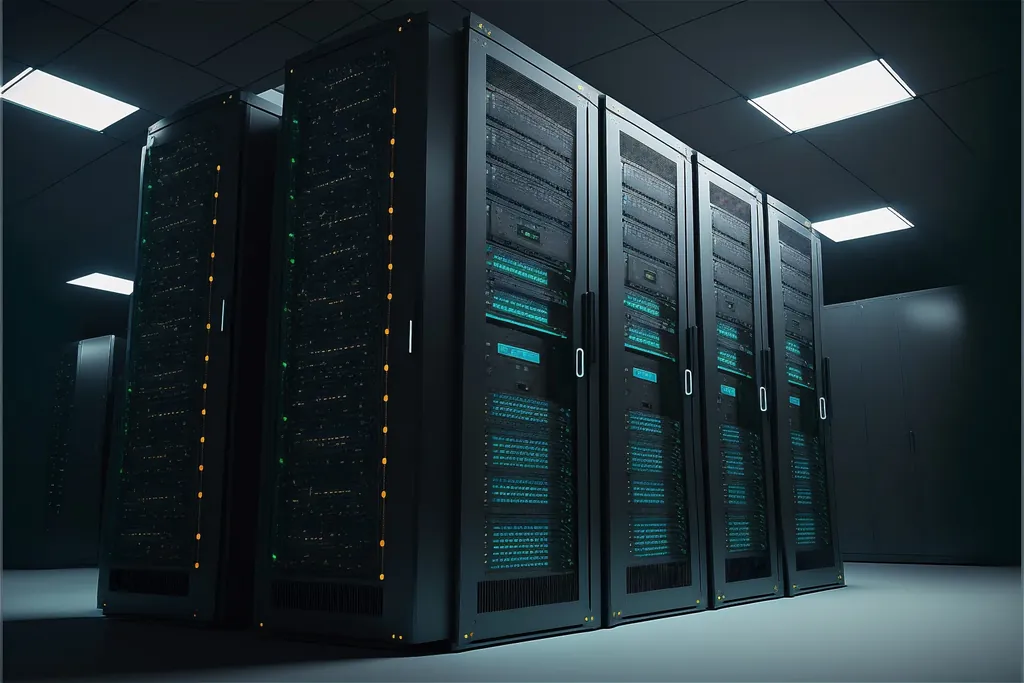
LTWMS Server
The LTWMS server runs the database and WMS processes required for warehouse operation. Oracle and Microsoft SQL Server databases are supported. These processes include:
- Communication with Level 1, Level 2 and Level 3 systems
- Transport management
- Routing and collision avoidance
- Temperature models
- System monitoring
- Cleanup jobs for removing old data
- Other project-specific processes
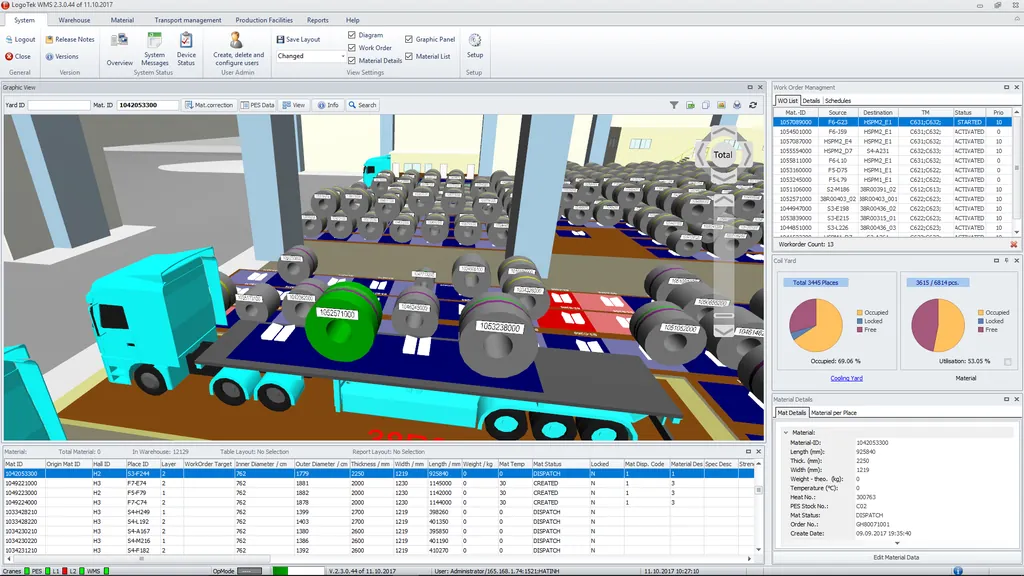
WMS Client
The WMS client is a powerful user interface for warehouse operation. It combines sophisticated 3D and 2D real-time visualization with a comprehensive set of functions for:
- Material management and material history
- Transport management for incoming and outgoing goods
- Production-schedule management
- Warehouse editing
- System monitoring
- Reporting with an integrated report editor
- Communication analysis and telegram viewing
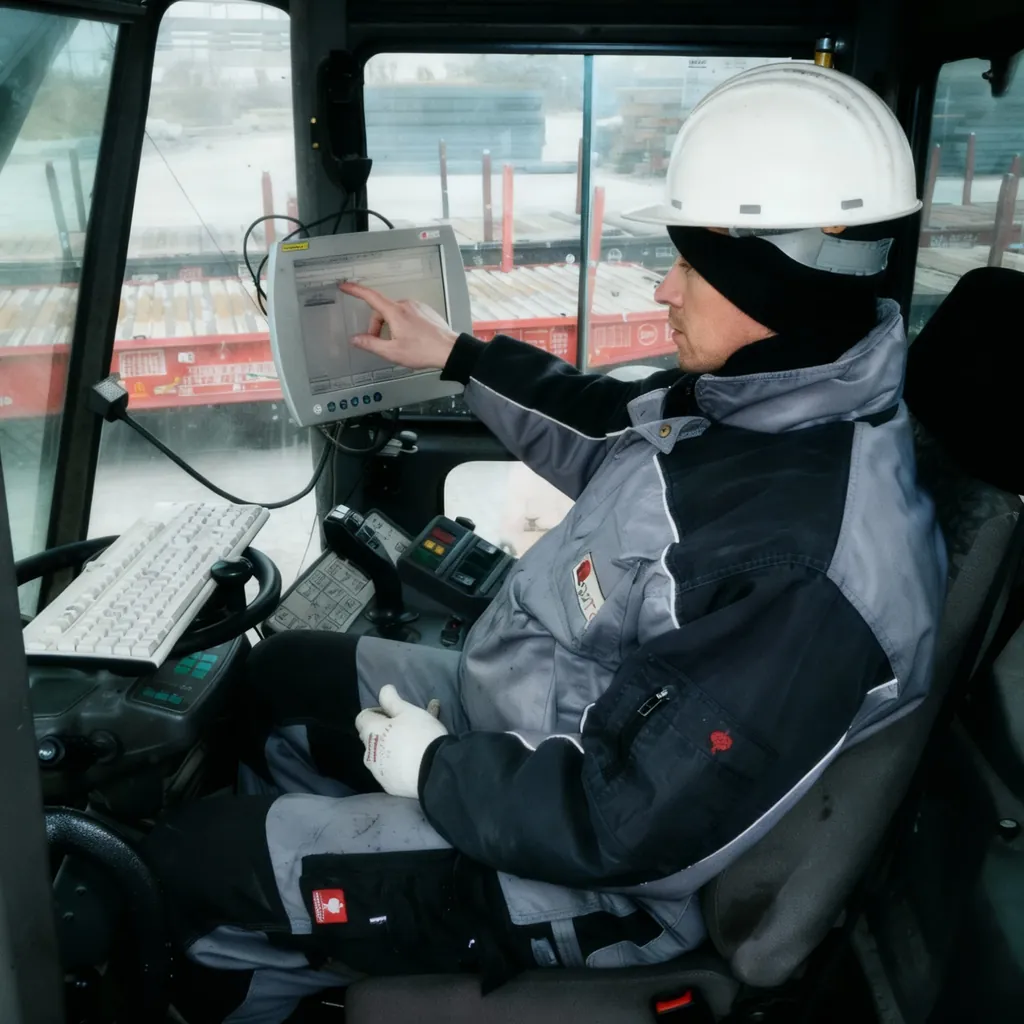
Vehicle Clients
LTWMS includes vehicle-client software optimized for use on overhead cranes, forklifts and heavy-load carriers. The vehicle client provides different 2D and 3D views according to the vehicle and material type. It also supports the parameterization and monitoring of vehicle positioning sensors.
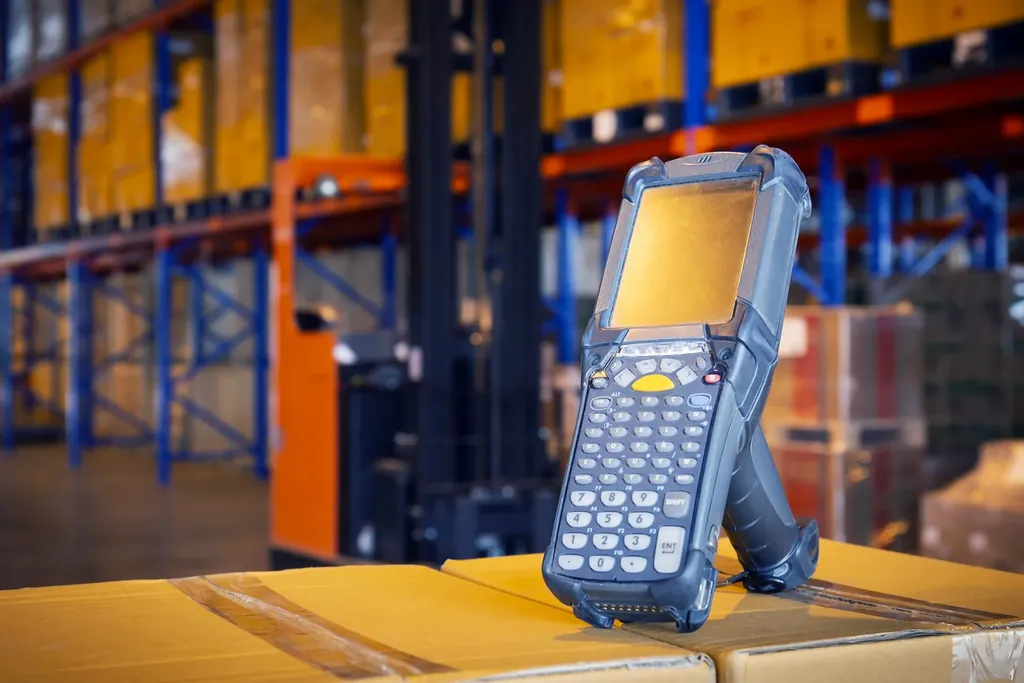
Mobile Clients
LTWMS supports several types of mobile client devices. Web-based applications are available for mobile phones, industrial PDAs and tablet computers. The software is optimized for environments with limited connectivity or unstable networks.
Identification technologies such as barcodes, RFID and 2D codes are supported.
Connectivity
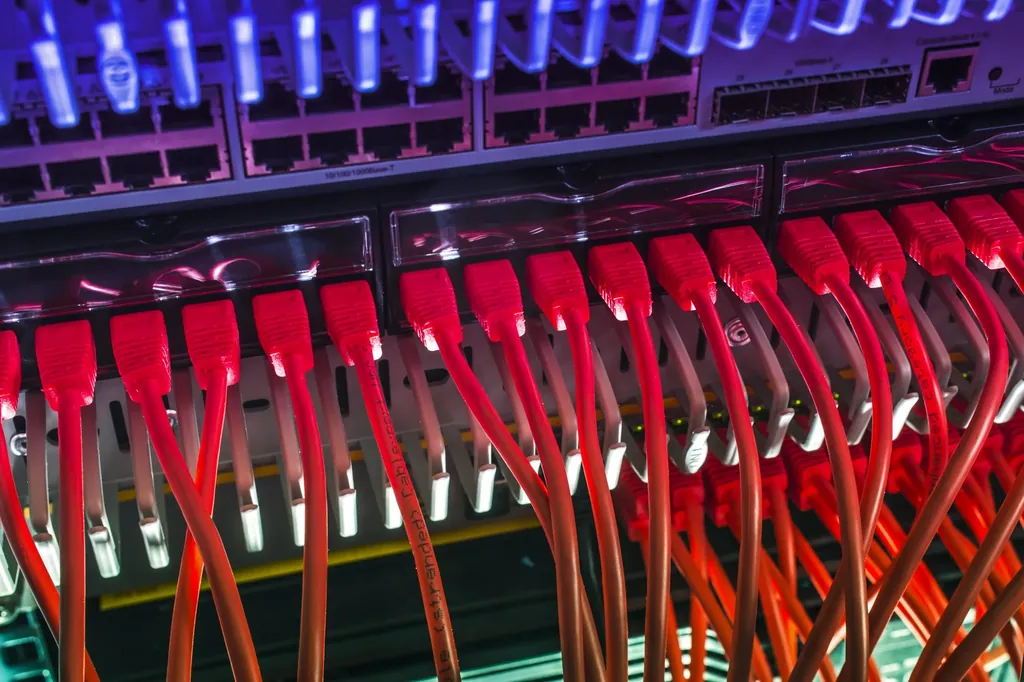
A warehouse management system must connect with production facilities and the Level 1 to Level 3 systems of a steel plant. Interfaces can be configured individually for each application area. Examples include:
- Level 3: PES and MES (TCP/IP, MQS)
- Level 2: furnace computers, caster computers, rolling-mill computers, skin-pass mills and sampling units
- Level 1: vehicle tracking, roller-table control, charging beds, scanner systems and identification systems
Transport Logic
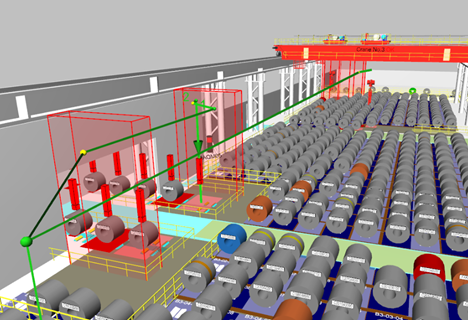
Transport orders are created automatically by LTWMS according to storage rules and restrictions. Production schedules, material properties and crane status are used to generate the orders, assign appropriate transport equipment and select suitable storage locations. Authorized users can edit the rules directly in LTWMS.
Temperature models can calculate the current material temperature and use it when selecting material for loading or further processing.
Tracking Equipment
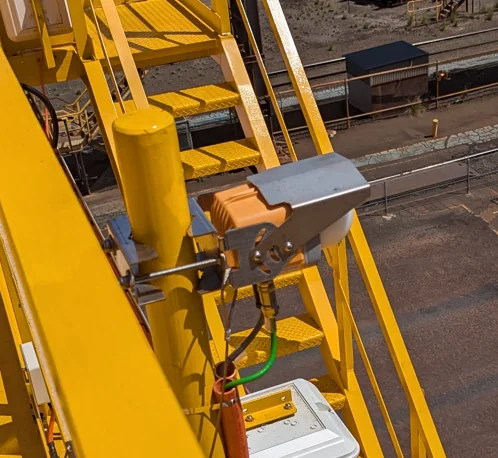
Real-time updates of material locations require modern sensor technology. LTWMS integrates sensors for transport equipment such as cranes, forklifts and roller tables. Supported technologies include:
- Laser distance sensors
- Radar sensors (Symeo LPR and Kymati)
- Barcode position sensors
- LiDAR scanners and positioning systems
- Real-time kinematic (RTK) GPS
- Load sensors
- Additional project-specific sensors
Fully Automatic Cranes
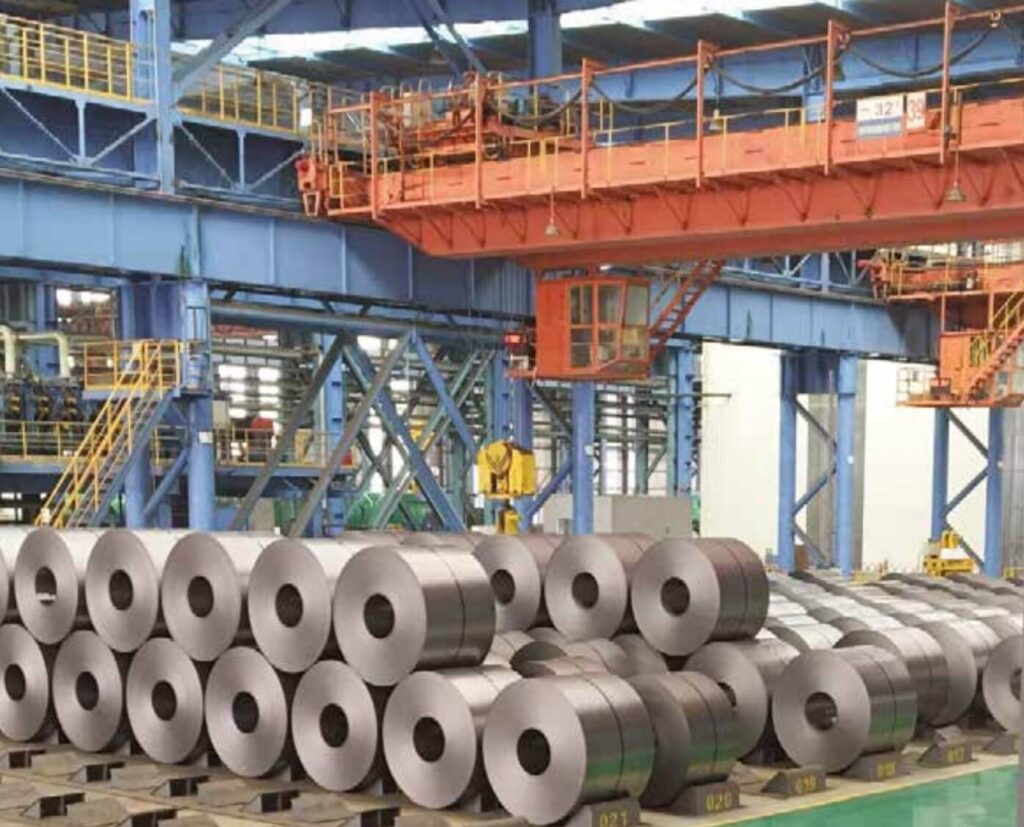
LTWMS integrates fully automatic cranes. It provides routing functions to navigate around obstacles and avoid collisions, and it records crane data for maintenance purposes.
LTWMS combines steel warehouse management software and a metal yard management system with material tracking software and crane warehouse automation.
FAQ
Questions about LTWMS
Answers about warehouse visibility, transport coordination and system integration.
What information does LTWMS manage?
LTWMS connects material identities, locations, movements, storage rules, transport orders and relevant equipment status.
How can LTWMS support transport coordination?
Using current material and equipment data, the system can support storage-location selection and generate transport orders based on configured rules.
How do operators see warehouse and yard status?
2D and 3D visualization can provide an up-to-date overview of inventory, locations and movements.
Can LTWMS exchange data with existing systems?
Yes. Interfaces can connect LTWMS with production planning, automation, cranes and higher-level systems.